Beaches of
NormandyTours
NormandyTours
The Second World War is preserved not only in the history books and museums, but also in the uncountable personal memories and stories of the men who fought in it. Most of these stories are lost forever – kept a secret until the bearer’s death, or only related to closest family, who will remember it for a few generations until it is lost to the ages.
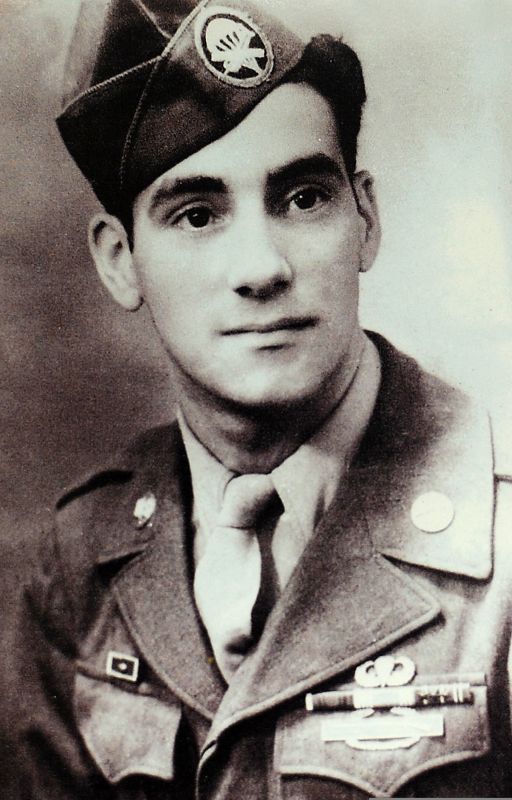
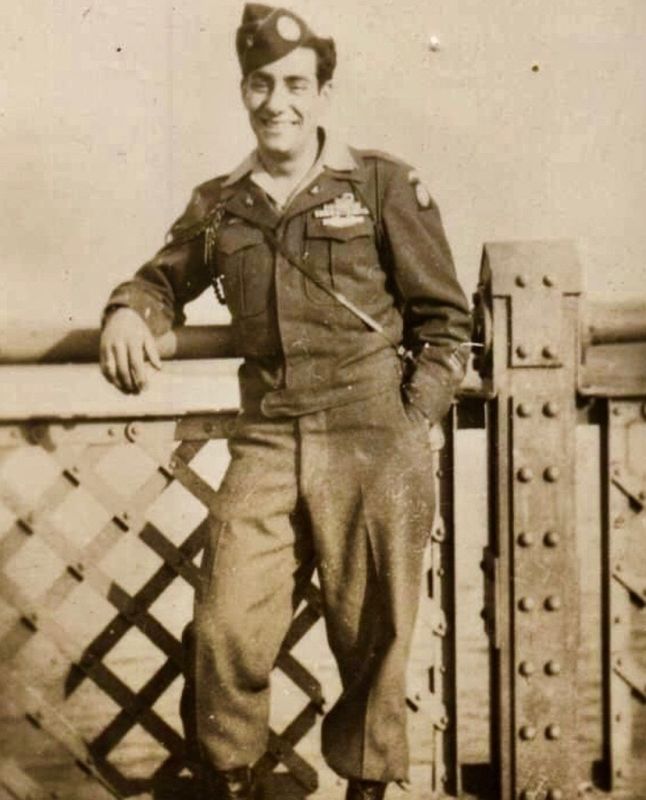
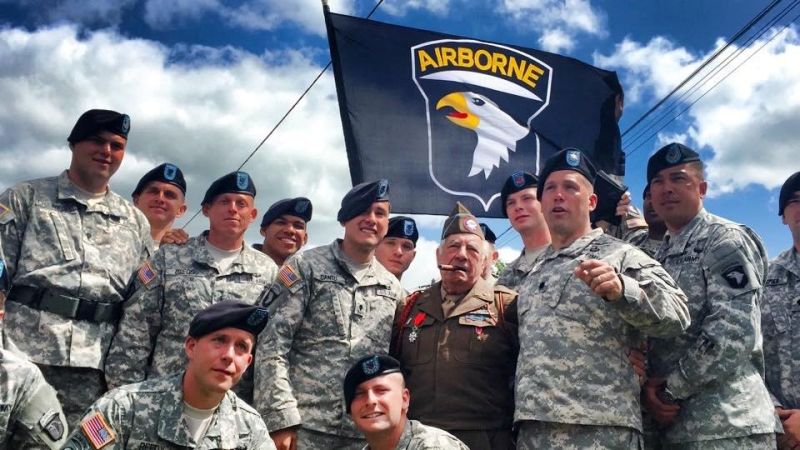
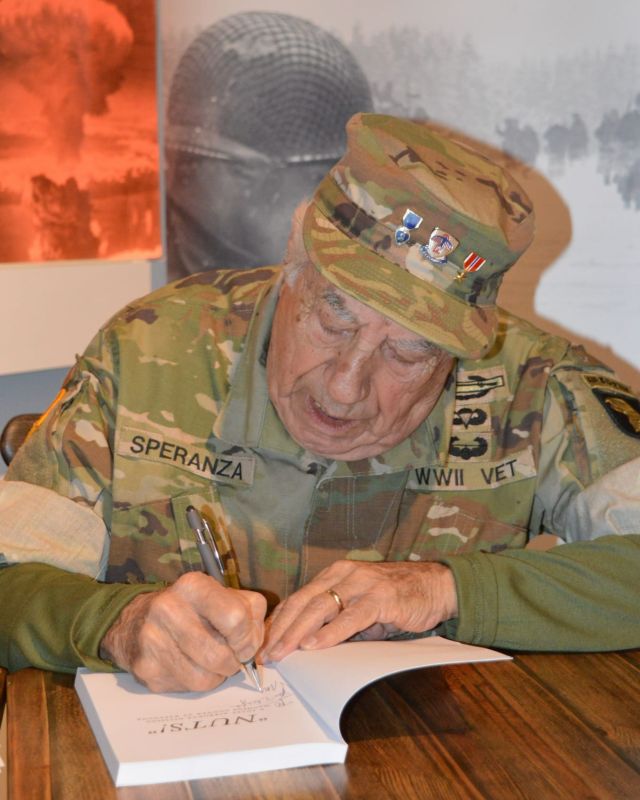
The story of Private First Class Vincent Speranza from H Company, 501st Parachute Infantry Regiment, 101st Airborne Division (The Screaming Eagles) is one of the exceptions. It’s one of the personal stories that became widely known and will be preserved for posterity. This article is about how Speranza joined the Screaming Eagles and how he became immortalized in Belgian folklore – and a brand of beer.
Speranza was born on March 23, 1925, in Hell’s Kitchen, New York and grew up on Staten Island in a large immigrant Italian family from Sicily. He was 16 when America entered World War II. He later recalled: “It was a Sunday, I was riding my bike, and when I went into the store, everything was quiet. I said ‘Hey!’ and they said ‘Shut up!’ President Roosevelt was speaking and he was saying something about the Japanese and Pearl Harbor. I jumped on my bicycle, quickly ran home and told my father ‘Quickly, put the radio on!’ He put the radio on in time for us to hear President Franklin D. Roosevelt saying ‘A state of war exists between the Empire of Japan and the United States of America.’ At that moment, my father turned around, he called his four sons (I was the middle boy), and he said ‘Boys, they won’t take me because I’m too old, but I expect my sons…’ We said, ‘We know, Papa, they won’t take us until we’re 18.’ And he said ‘I know. But I just want you boys to know how I feel about it. Nowhere in the entire world can you come to a place with nothing except a willingness to work, and look at us today: a family, eight children, we have a home and a car’ and he said ‘Boys, this country must not fail.’“ (Note that Speranza must have misremembered, since the Day of Infamy Speech was delivered on the 8th, a Monday.)
Speranza was finally accepted for service in 1943, when he turned 18. When his father walked him to the station, Vince expected him to speak up and say something, but the man stayed silent. Finally, when Vince was already on the train and the engine was starting to pull out of the station, he said “Son, just don’t do anything to make me hang my head in shame.”
Speranza got his training with the 87th Infantry Division at the Infantry School at Fort Benning. He enjoyed his time there, but was eager to see action. He grew restless: after 19 weeks of basic training, he had to spend another four in advanced infantry training. Then two more for heavy weapons, and then on to jungle training.
One day, they took his entire regiment to a field and told them to sit down for a demonstration. Three C-47s (The C-47) passed overhead and paratroopers jumped out. They landed, rolled up their parachutes, double-timed it to the audience and delivered a short speech about looking for a few good men. Speranza raised his hand as soon as they mentioned the extra 50$ per month jump pay.
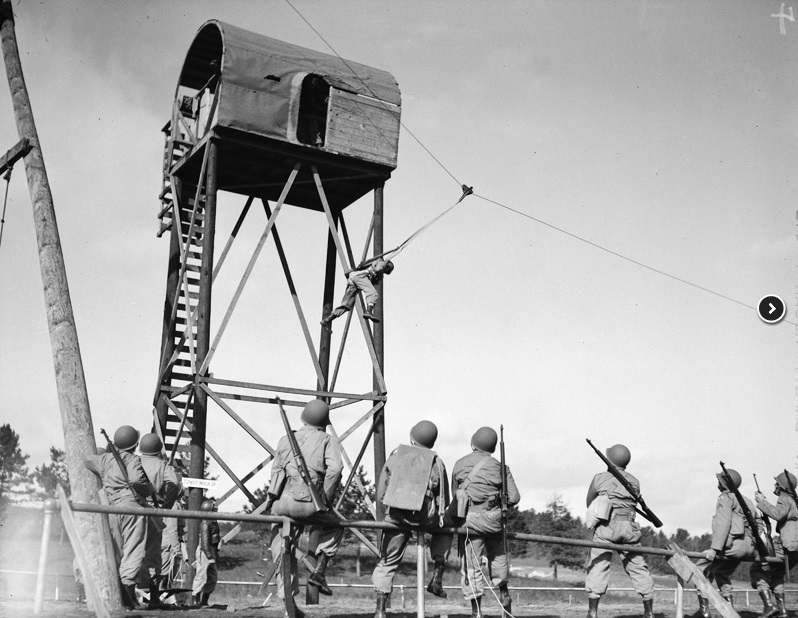
Paratroopers in training had to pack their own parachutes before their first jump. “You packed your parachute on Friday, but the jump is on Monday” Speranza later said. “So you got all weekend to worry about it: did I do it right? ‘Sergeant, can I…?’ ‘Nah, you did your thing, that’s it.”
He was understandably nervous and jittery while sitting in the plane before his first jump. The others were smoking cigarettes on board and it seemed to calm them down, so he asked for one. He had, however, never smoked a cigarette, and started choking, spitting, coughing and hacking away. “Stand up! Hook up!” he heard, and the choking disappeared. He remembered his father’s words at the train station: “Just don’t do anything to make me hang my head in shame,” and jumped without hesitation when it was his turn. The parachute opened fine, and, following his training, he looked up to make sure the canopy was intact. The scary sensations disappeared as he descended through the sky, soon realizing that the ground was coming up pretty fast. Once on the ground, his first thought was “I’m a paratrooper! …but wait, you’ve got four more [practice jumps] to go.”
Speranza crossed the Atlantic aboard the RMS Queen Mary, a British ocean liner under American control. The only English port large enough to service the ship was in Southampton, too close to potential German U-boats; the ship headed for Scotland, where the men were disembarked by smaller boats and taken across the Great Britain to their station.
Speranza did not join the 101st Airborne Division for the D-Day landings, but just after the division had suffered heavy casualties and lost much equipment during Operation Market Garden (Operation Market Garden) in the Netherlands. They were settling in for the winter, expecting some rest, supplies and a chance to train the reinforcements.
One morning, the sergeant woke him and his unit at 4 a.m. with a loud clamor. “Grab your socks, we’re moving up!” The men knew the weather was unsuited for jump, and replied “You’re crazy, we’ll all break our legs!” “You’re not jumping, you’re gonna go up in trucks.” Unknown to them, Germany launched its last major counterattack on the Western Front, on December 16, 1944, through the Ardennes Forest. The railway and road hub of Bastogne was in the way of the German advance and the 101st were to rush there and hold it against all comers.
The unit was still missing pieces of gear: rifles, helmets, Speranza’s machine gun. They were told to write a list and they’ll be issued what they needed – this never happened, just like they didn’t get anything warmer than their summer jackets. After a day and a night on the trucks, in Vincent's words, “we were madder at each other than we were at the Germans.” There were no stops on the way; people who had to relieve themselves did it over the edge of the truck, and the wind often blew the stuff back at the guys sitting in the back of the vehicle.
Once they arrived, they scrounged whatever weapons and ammunition they could get from the stragglers who were passing through Bastogne after the first German attack that broke four Allied divisions. Speranza managed to score a .30 caliber machine gun. (The .30 cal Browning) It was with this gun that he earned the nickname "Curse and Traverse Speranza."
There was no rest for the weary, and Speranza's unit, H Company, was ordered to dig in immediately at a certain location. After hours of digging foxholes, they flopped into them exhausted at around 3 or 4 a.m., only for the sergeant to come along and tell them to move out and start digging in a new spot. These ended up being shallower; as soon as they were done, they were ordered to move and dig in yet again. On the last occasion, they just scraped the snow to the side and lay on the ground, utterly spent. The siege of Bastogne was just starting.
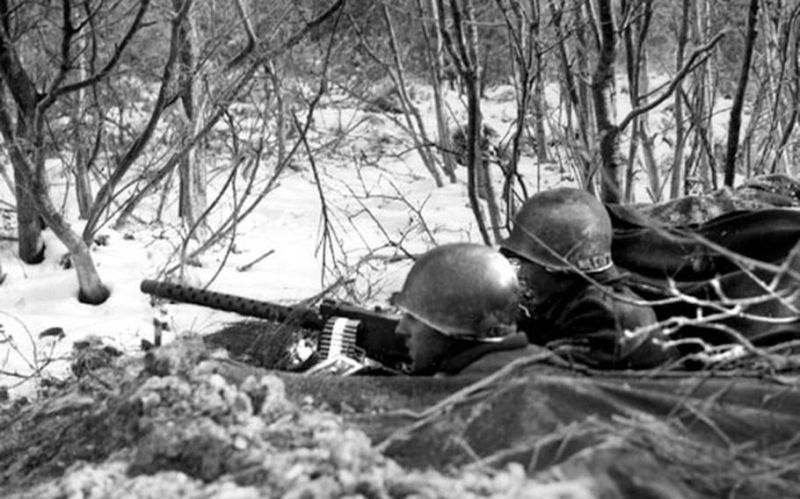
H Company came under heavy artillery bombardment in the morning, and all they could do was lie in their holes face down and grit their teeth. Speranza later said that mortars were the worst, as you couldn't hear them coming. Once the shelling was over, the Germans appeared in the lifting fog, crossing a stretch of open ground with surprising confidence under the cover of tanks. H Company held its fire until the Germans were within 400 yards (365 meters), then opened up suddenly, helped by the American artillery. Speranza later credited their victory to Brigadier General Anthony McAuliffe (The Man Who Said "Nuts!"), the division's artillery commander and the senior officer in Bastogne. McAuliffe set up his batteries in locations where they could rotate around 360°, concentrating fire on whichever area the Germans were coming from. The intensity of the artillery sent the first German advance fleeing and knocked out their tanks.
With most of the medical supplies and personnel captured in the initial German attack before the 101st Division could arrive, the local church and the seminary building were converted into an aid station.
As a note, there was also a main hospital set up elsewhere, and an additional aid station for the 10th Armored Division, manned by an American doctor and two Belgian nurses. (The Angels of Bastogne) The HBO miniseries Band of Brothers depicts the nurses working at the church, but this is not historically correct.
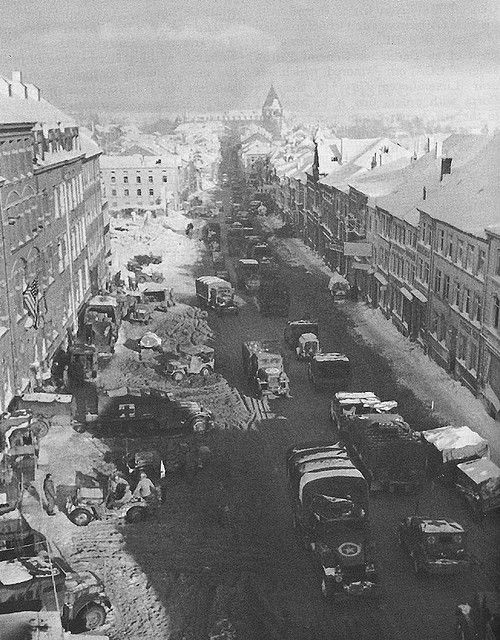
During a lull in the fighting, Speranza was sent back to town by his platoon sergeant for some radio batteries. Once there, he visited his friend and assistant machine gunner Joe Willis in the church, who was taken there after getting some shrapnel in his leg. Willis asked Speranza to go and find him something to drink. Speranza was doubtful he could find any booze in the middle of a siege, but he agreed to go looking in the local abandoned taverns. The first place he checked was bombed out, but the second one had a still-working beer tap. There were no intact glasses anywhere, though, so he took his helmet (The "Steel Pot") – the same one he would use as a foxhole toilet on the front line –, filled it with beer, and took it back to share it with Joe and the other wounded. His comrades quickly urged him to go and get a second round. As he was coming back with the refill, he was stopped in the church door by the regimental surgeon, an irate major. Speranza said he was only “bringing aid and comfort to the wounded” but the surgeon berated him for bringing alcohol to people with chest and stomach wounds, who might die from drinking it, and angrily dismissed him. Speranza rapidly saluted, put on his helmet – pouring the beer on himself –, and ran back to the front line.
You might have heard the story above before, but you probably didn't know that Speranza also had another booze-related adventure during the war. He was once in a hospital in England after getting wounded, and he and a friend were given recuperation leave. Liquor was strictly rationed and no bar would sell them an entire bottle, so they decided to live it up and visit Scotland. "Hey, we're never going to survive this damn war, we're going to whip it up and make sure we live" – he once said. They made several copies of their travel orders, so they could hand in extras whenever they hitched a ride with the air force. They then traveled around, playing the black market of money changers to turn their back pay of 173$ into 1,200$ (well over 20,000 in today's money). They bought a car, drove up to Scotland, and were eventually directed to the nearby Johnnie Walker factory, where the night watchman found them a "broken crate" of 12 bottles in exchange for several boxes of cigarettes. "For the next five days we were the kings of Scotland" – Speranza once finished his tale.
There was also another, far darker moment in the war he never forgot. One day, already in Germany, they were driven to a forest and told "we think the Germans had dug in in there, go and clean it out." All they found at first were empty foxholes, but they eventually noticed a smell that got stronger the further they went. Eventually, they come upon a large clearing with a fenced camp. It was Kaufering, one of the satellite camps of Dachau concentration camp. (The Liberation of Dachau)
"Now, don't forget we were kids, 19-year-old kids" – he recalled – "We were good troops by then, but we had no life experience; we came right out of high school into the Army. And to see... there was a big hole dug in the middle of the compound, a bulldozer over here, and at the far end, thrown in like garbage, piles of bodies, all skin and bone. All sizes. On the right, the ovens were still smoking with the bones in them. And over here there was a shed with cubbyholes and people were in the shed, and nobody was standing up and walking. They could only crawl on their elbows, and they came crawling out and they're hugging our feet and kissing our boots, coming out, coming out. […] That day, whatever little respect we had for the German army and the German people disappeared. We could not believe that one man could do this to another. Men fighting each other, that's one thing. But to just gather up a bunch of people, babies, old men, women, old women, and throwing them in there, starving and beating them, and then, and then... H Company did not take a prisoner for the rest of the war."
Speranza returned home after the war on the same ship that took him to Britain, the RMS Queen Mary. (Operation Magic Carpet) He received the Purple Heart and the Bronze Star on demobilization. He once recalled how he embarked on his civilian life: “I remember as a kid reading and seeing movies about the World War I guys when they came home, the battle shock and the nightmares and the shivers and personalities beating their wives and so on. (The Terror That Lingers) When I came home, I looked in the mirror in my mother’s house, and I talked to myself. I said, listen! You are not going to be one of these guys who comes home and has nightmares and flashbacks and all that crap. You’re going to take all that crap, cutting people in half with the machine gun, and put it back here, lock the door. You can’t forget it, but you can isolate it.” This attitude helped him settle into civilian life as a high school teacher.
For the next 65 years, Speranza lived by the rule he set for himself. He did not think about the war. He did not attend veterans’ reunions. He didn’t even know there were annual celebrations in Europe. He married Iva Leftwich in 1948, and the couple had a son Vincent, and two daughters, Katharine and Susan.
A chance meeting in 2009 with a Belgian lady in a shop changed everything. She told him that the people of Bastogne never forgot his unit, the 101st Airborne, and that there’s also an American cemetery nearby. Speranza’s daughter urged him to go, to visit the cemetery at least, and he finally gave in.
He planned to spend three days in Bastogne, then another three in Paris, just him and his daughter. Once in Bastogne, he was heading for a bank to change money when his daughter saw a mannequin in a window, dressed in a paratrooper’s uniform. They went in to have a look, and he was spotted by a man who turned out to be a Dutch paratrooper officer, who went over and started a conversation. Once the man learned that Speranza fought at Bastogne, he offered to take them to his old foxholes. They picked up another man, a Belgian tank commander, and headed out for the woods, where he was shown the specific hole that used to be his. He asked the men how they knew for sure. They explained that Speranza’s company commander, Captain Stanley, took a piece of cardboard from a K-ration box (Feeding an Army), drew a diagram of where he placed the machine guns, and turned it in with his after-action report of the day.
.jpg)
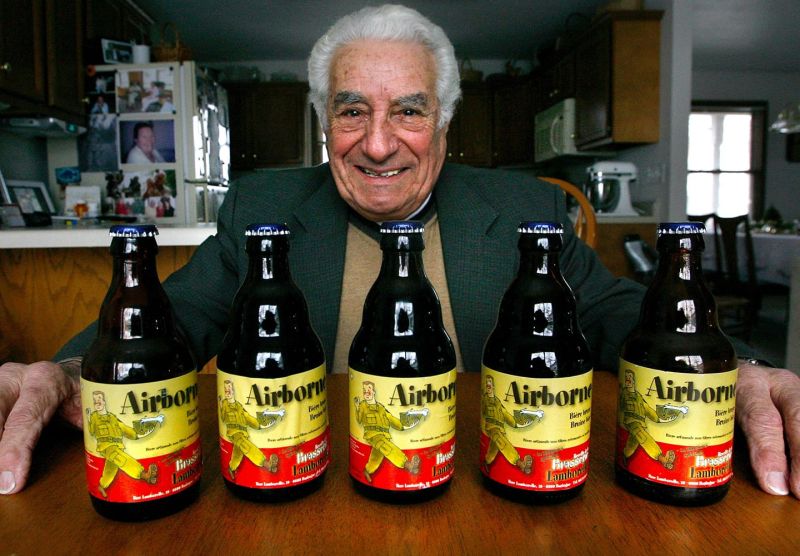
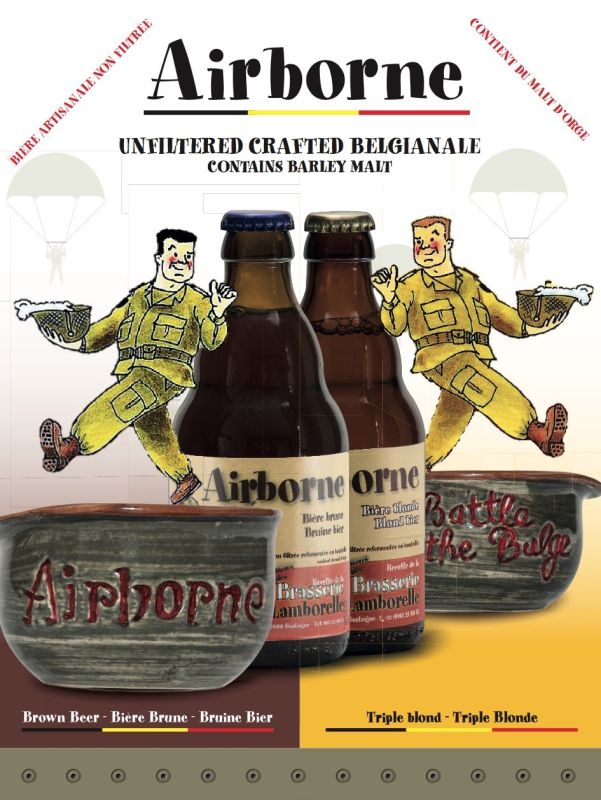
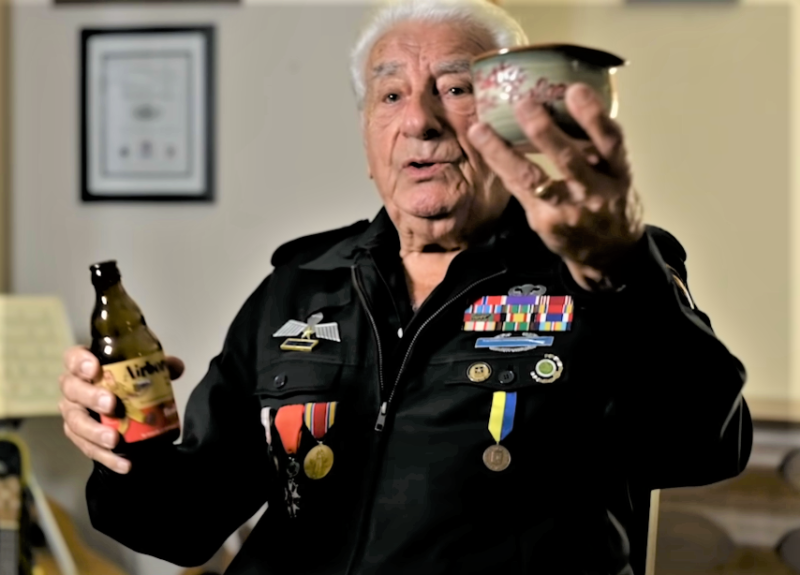
Speranza invited the two men for lunch on the way back to town. The three soldiers were going through three bottles of wine and sharing stories, and Speranza recalled his beer adventure. The other two exclaimed: “Don’t you know you’re famous in Europe?” They explained that everybody in the area knew the story of the soldier who brought beer for his wounded buddies in his helmet, but it was dismissed as a tall tale… until that very moment. The two Europeans had the waiter bring something for Speranza: a bottle of local brew called Airborne Beer, created by a local beermaker who was inspired by the story.
The visit to Europe changed Speranza’s life. He started making three visits to Europe every year, to Normandy, the Netherlands and Bastogne, meeting fans and fellow veterans. He wrote a book about his wartime experiences at the age of 89. He passed away in 2023, at the age of 98, one year after announcing that his health no longer allowed him to visit Europe. He is buried in Auburn Cemetery, Sangamon County, Illinois.
While you can no longer clink your glass with Vince, you can still try the beer he inspired. Airborne Beer is brewed by the deBouillon brewery, based on a recipe from the Brasserie Lamborelle restaurant in Bastogne. It comes in three versions: blonde (pale ale with relatively low alcohol content), brown and tripel (a strong pale ale). The blonde version is characterized by a creamy white head, compactness, aromas of barley and hops, and a prolonged bitterness. The brown version presents roasted malt taste with a sweet aftertaste, and has anise and clove on the nose. Tripel Airborne Beer has fruity aromas with plum on the nose with flavors of mixed fruit and cream on the palate. You can try them at the most authentic location, the town of Bastogne, on our Band of Brothers Tours and Battle of the Bulge Anniversary Tour. The beer is traditionally drunk out of a World War II helmet cup. Join us on a tour, and share, to quote Vincent Speranza himself, “a toast to all the good people in the world.”




Beaches of Normandy Tours
Beaches of Normandy Tours SAS, Normandy, France
Band of Brothers Tours
Band of Brothers Tours FZCO, Dubai, UAE