
Beaches of
NormandyTours
NormandyTours
Greenland, the world’s largest island, located largely beyond the Arctic Circle, is not a place that often comes up in discussions of World War II. And yet, while most of it is a frozen wasteland with a total wartime population of less than 20,000 (over twice that today), it played an easily overlooked yet strategic role in Allied victory. Thousands of American soldiers and coast guardsman served in Greenland during the war. With Greenland making regular appearances on the news and in public discourse these days, we saw it fit to provide a historical overview of the island and its relations with the United States during the war. The first part of our article (Greenland and the United States – Part I) described how Greenland sought protection after the Third Reich invaded Denmark, and how the United States established a presence there to secure its strategically important reserves of cryolite ore and to create a way station for Lend Lease supplies heading to Europe. This second part is about Greenland’s importance in wartime weather forecasting and U.S. presence during the Cold War.
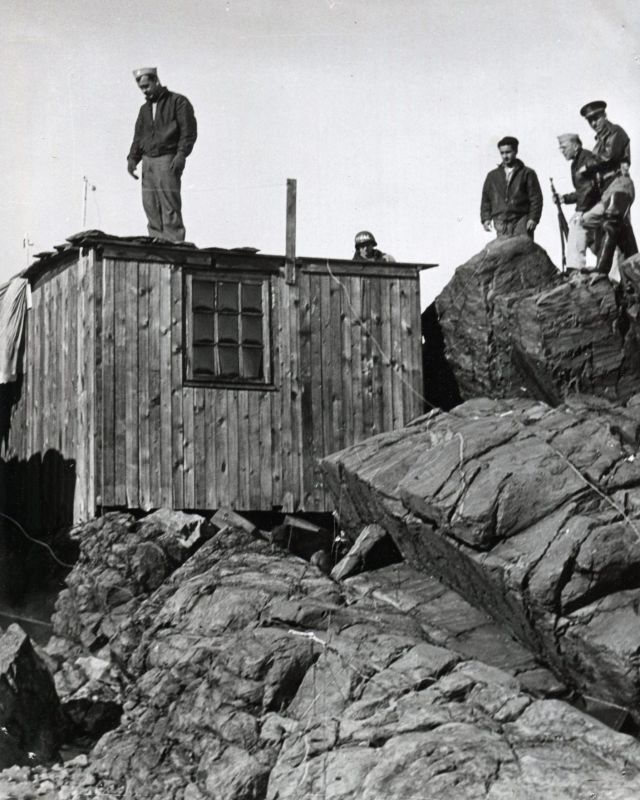
Greenland had, and still has, another major export beside cryolite: storms. Most Western European weather patterns form near Greenland. Once Europe plunged into World War II, the weather forecast became another front in the conflict (The Weather War). The side with earlier and more accurate forecasts gained a military advantage, as it could plan its operations around the upcoming weather, knowing when cloud cover might impair air operations or when the seas will be calm enough for an amphibious landing. Getting those weather forecasts relied on Greenlandic weather stations. Both Denmark and Norway operated several stations on the island’s east coast, and the allegiance of the station crews with highly doubtful after the German occupation of both countries. During the summer crew rotations of 1940 and 41, the Germans smuggled in several Nazi loyalists to make sure the stations would keep reporting. Additional pro-Nazi Danes and Norwegians were sent aboard Norwegian ships to operate two pre-existing stations and construct a third one, with the goal of getting better weather forecasts for Operation Sea Lion, the planned invasion of Britain. (The Sea Lion That Sank) The Free Norwegian gunboat Fridthof Nansen destroyed one of the stations, seized another and destroyed its radio equipment, and captured one of the trawlers transporting weather crews.
In the summer of 1941, the Coast Guard (with the cooperation of Greenlandic governor Eske Brun) established the Northeast Greenland Sledge Patrol to hunt for German activity along the east coast. Originally formed with 15 men, many of them local hunters, the patrol still exists today as the Sirius Dog Sled Patrol, an elite Danish unit.
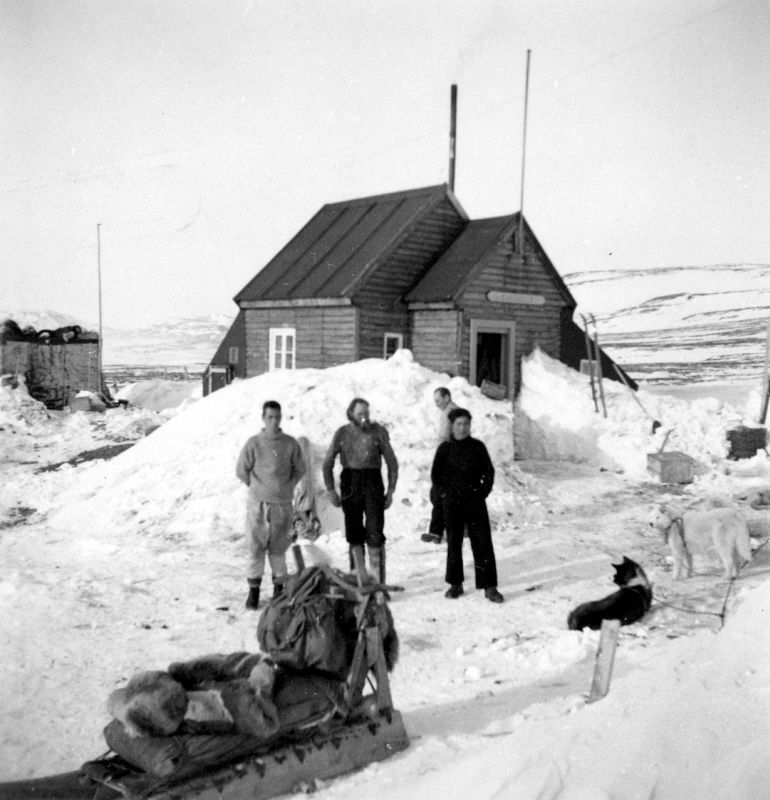
Eventually, beginning from August 1942, Germany did manage to establish a few secret weather stations on the east coast. One was detected by the Allies, but the crew managed to withdraw before they could be attacked. One operated for one winter before the crew returned home. Two German expeditions were seized by the Coast Guard in late 1944.
One of the more relatively successful German stations was Holzauge (“wooden eye,” German slang for a lookout), established in the fall of 1942 when the Sachse, a fishing steamer converted into a meteorological observation ship landed on the east coast of Greenland with 17 men, a mixture of meteorologists and German soldiers. The station was discovered by the Northeast Greenland Sledge Patrol on March 11, 1943. The Germans knew they were spotted and gave chase to silence the patrol, forcing the latter to abandon their equipment and dogs as they fled. The patrol reported the German station, and the Sledge Patrol commander requested automatic weapons for defense. Governor Brun officially designated the patrol the “Army of Greenland,” creating the island’s first own military force.
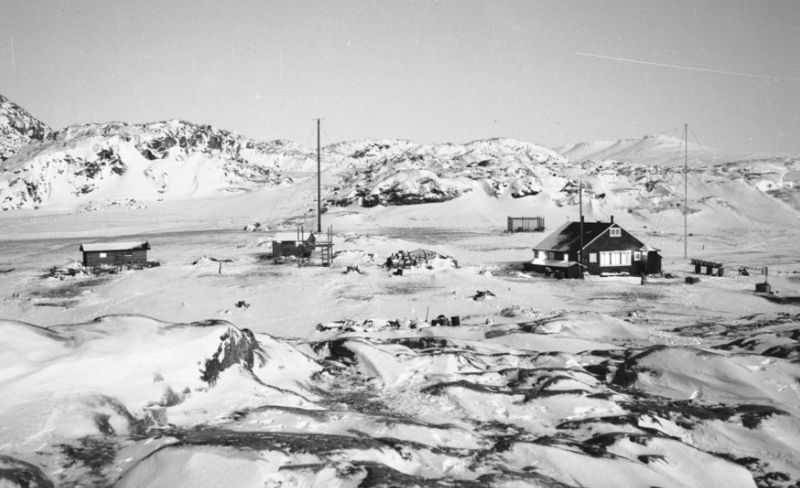
The Germans at Holzauge launched a raid against the sledge station at Eskimonæs (Bluie East Five by its American code), seizing it and burning it down on March 23, forcing the patrol to make a 400-mile (643 km) trek to the next nearest station without supplies or equipment. On the way back to their own base, the Germans also ambushed another member of the patrol, accidentally killing him with a burst of machine gun fire meant for his dogs. A month later, the commander of the German military detachment was himself captured by the patrol and handed over to the Americans. Holzauge station was bombed by the USAAF, but the station crew managed to get away on a flying boat.
The Sledge Patrol discovered another German station, Bassgeiger, in April 1944. They attacked it, killing a German lieutenant in the skirmish and forcing the others to evacuate the place. The last German base, Edelweiss II, was captured by U.S. Army forces transported there by the icebreaker USCGC Eastwind. The Eastwind then proceeded to also capture the Externsteine, the German ship resupplying the station.
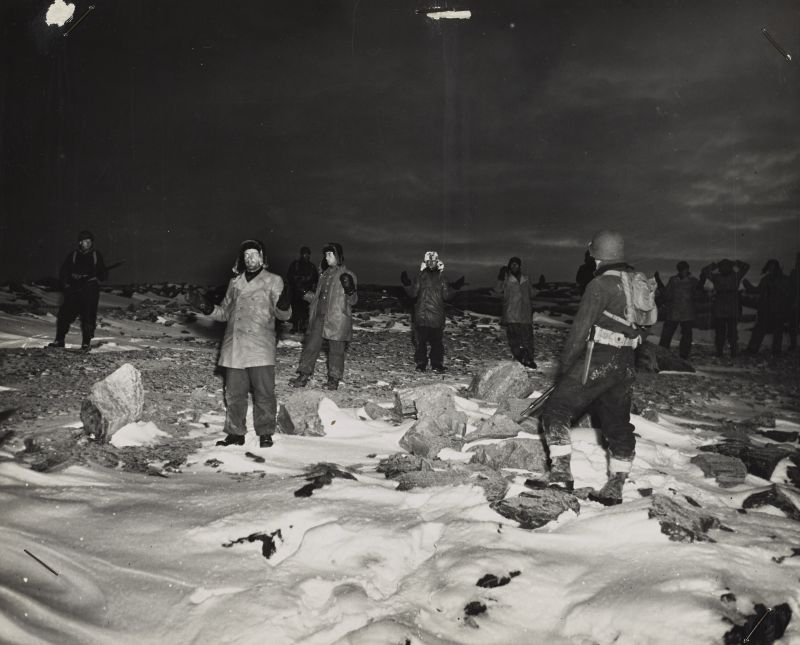
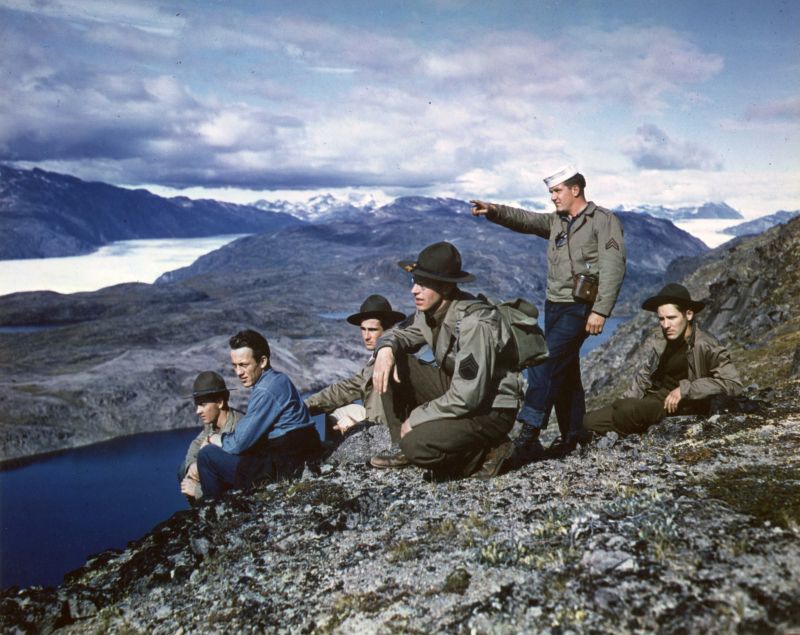
Some 6,000 U.S. servicemen were stationed in Greenland at any time, a massive presence relative to the roughly 18,000 inhabitants. Their presence transformed Greenlandic society. Most locals, especially the Inuit who made up the vast majority of the population, had been previously isolated from the outside world. Meeting and interacting with people from another culture opened up their horizons. Shopping catalogues gave them a glimpse of a lifestyle they never knew about. The knowledge that Greenland was part of the war effort gave the locals a sense of belonging to the rest of the world and an interest in the future. Radios became popular, and a Danish-language newspaper was founded. (Interestingly, a Kalaallisut-language newspaper for native Greenlanders had already been in existence since 1861.) A gradual fraternization ban was eventually put in place to separate servicemen from the locals, but the jinn was out of the bottle. Greenland was now looking outwards and seeking its place in the world at large.
Relations with Denmark were re-established after the country’s liberation. Greenland’s colonial status was abolished in 1953, it became an integral part of the Kingdom of Denmark, and Greenlanders got Danish citizenship. Extensive social, economic and educational reforms were started. (Greenland was eventually granted Home Rule in 1979 and Self-Government in 2009, which means they’re internationally recognized as an independent people.
The Cold War developed almost immediately after the end of World War II, and Greenland retained its strategic importance, this time for its location. The GIUK Gap, the bodies of water between Greenland, Iceland and the northern tip of the United Kingdom, was the only route for the Soviet Navy to enter the Atlantic, and guarding it became a strategic priority. The U.S. offered to buy Greenland from Denmark, but the suggestion was rejected. Instead, the 1951 Greenland Defense Agreement reiterated the wartime arrangement between the U.S. and Greenland, giving the former the ability to build military bases and station troops in Greenland practically without limitations; this agreement is still in effect today.
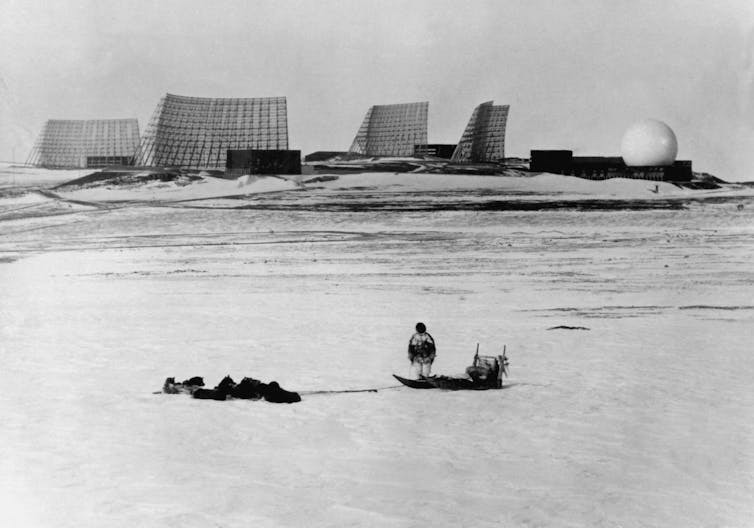
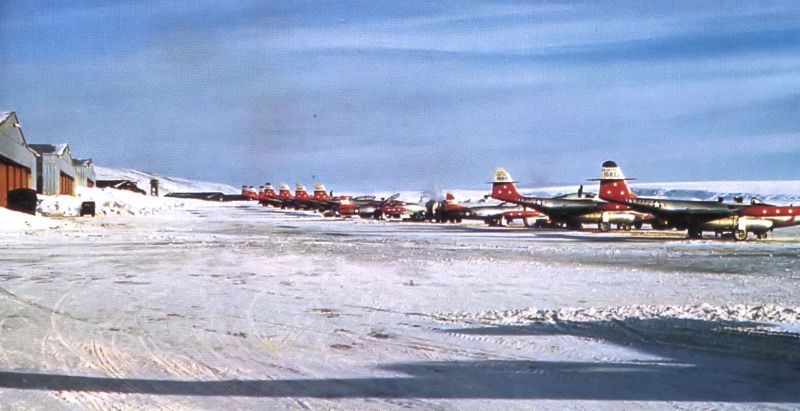
The Defense Agreement became a critical part of America’s defensive plans during the Cold War. The U.S. maintained its three wartime bases and built additional ones to detect and intercept Soviet submarines crossing the GIUK gap and to protect the American continent against Soviet attacks through the Arctic.
The most famous Greenlandic base of the Cold War was Thule Air Base, established at the wartime site of Bluie West Six. Named after ultima Thule, a legendary northern land mentioned in Ancient Greek and Roman writings. While U.S. bases were generally sites so as not to impede the free movement of the locals, Thule was an exception, and the local Inughuit population was forcibly relocated shortly before the 1951 expansion. The base housed bombers, interceptors, nuclear missiles and 10,000 personnel. In 1968, a B-52 carrying four nuclear bombs crashed on the ice near the base, starting a fire and causing significant nuclear contamination. More than 700 Danish civilians and U.S. military personnel worked to clear up the contamination, the former without protective gear. Thule, now renamed Pituffik Space Base, is the only American station presently active on Greenland.
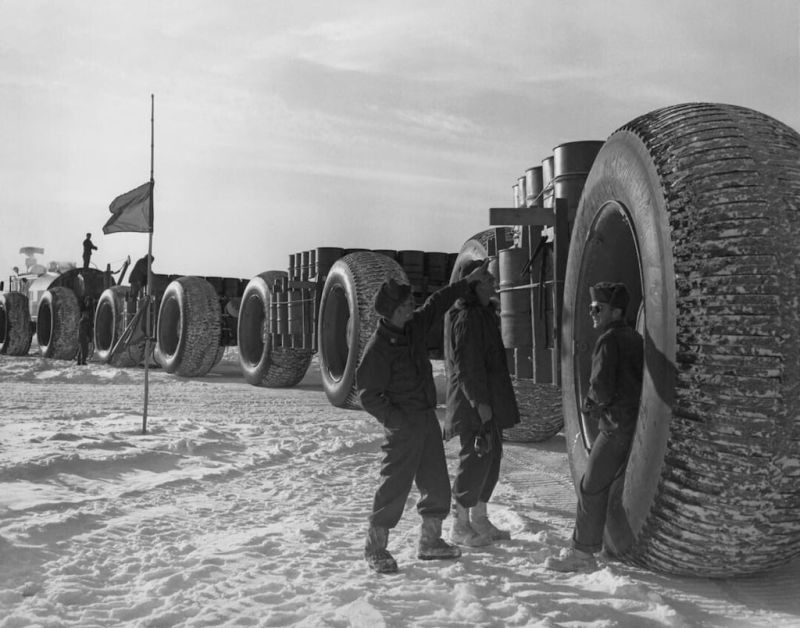
Another, lesser-known Greenland base was Camp Century, also called the City Under the Ice. Constructed in 1959, it was carved into the ice by giant snowplows and covered by metal arches and snow. The base was powered by the first portable nuclear plant in history, and it was the site of the first deep ice core drilling that penetrated the entire thickness of Arctic ice.
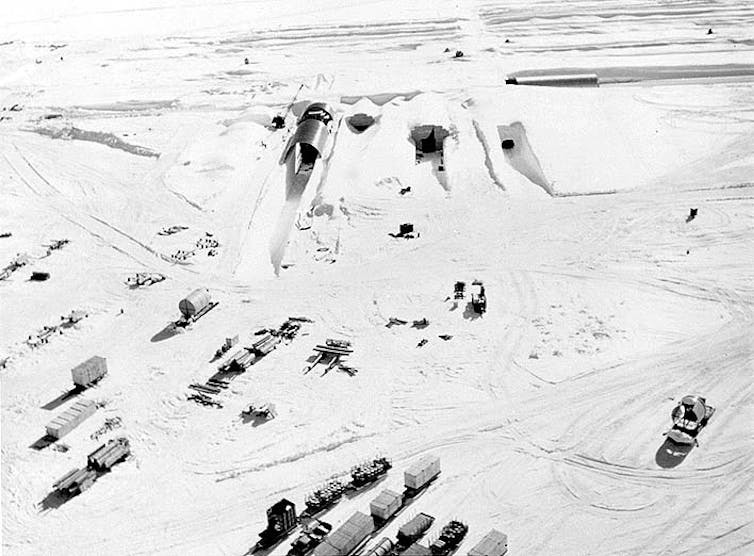
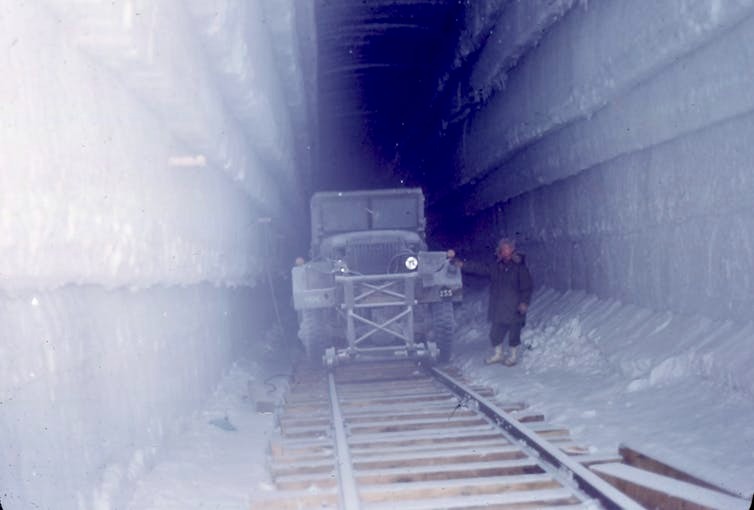
Camp Century’s primary purpose, however, was to be a preliminary camp for a far grander construction, Project Iceworm. Iceworm was going to be a network of under-ice railway tunnels, some 2,500 miles (4,000 km) in total, crisscrossing an area about the size of Alabama. Trains, possibly nuclear-powered ones according to some plans, would constantly shuffle 600 nuclear missiles from one launch site to another, able to launch them at the Soviet Union but denying the Soviets a clear target. Project Iceworm, and Camp Century itself, eventually failed due to an enemy more inexorable that Russia: Greenlandic ice. While seemingly rock-hard, the ice is actually slightly elastic and moves slowly, causing tunnels and rooms to deform and ceilings to eventually collapse. Camp Century was abandoned in 1966. Project Iceworm never grew larger than a 1,300 foot (400 m) stretch of under-ice track and a truck with railroad wheels.
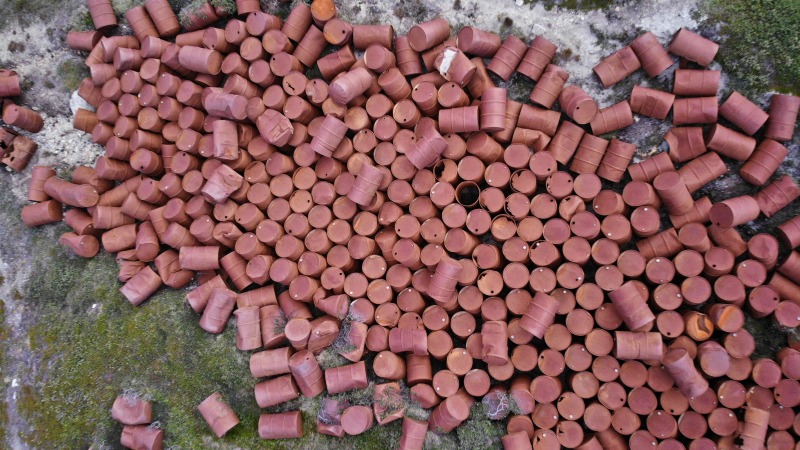
Camp Century and all other U.S. bases other than Pituffik might be gone, but they’ve left behind an unwelcome gift: waste. The buried remains of Camp Century alone hold 9,200 tons of waste, including radioactive materials, harmful chemicals, sewage and 200,000 liters (52,800 gallons) of diesel fuel. With global climate change causing Arctic ice to melt, these materials might eventually resurface and wreak havoc on the ecosystem and the health of area residents. Ruined buildings, aircraft wrecks and hundreds of thousands of rusting oil drums leaking toxic aviation fuel make a harmful memento. Cleanup is progressing at a glacial pace, and even that is being paid for by Denmark, not the United States.








Beaches of Normandy Tours
Beaches of Normandy Tours SAS, Normandy, France
Band of Brothers Tours
Band of Brothers Tours FZCO, Dubai, UAE