Beaches of
NormandyTours
NormandyTours
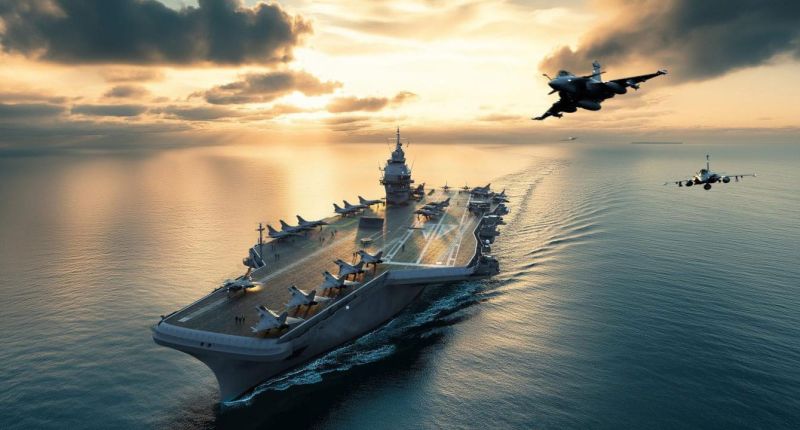
France is one of the major military powers of Europe, and the only nation outside the U.S. to ever operate a nuclear aircraft carrier (the Charles de Gaulle, the flagship of the French Navy). The country is now slated to construct a new nuclear carrier that will enter service in about 2038, the year the Charles de Gaulle is due to be retired. The current flagship bears the name of the leader of the Free French Forces in World War II and the first president of the country after the war. The new ship will also reference World War II in her name; she will be called France Libre, “Free France,” after the resistance government headed by de Gaulle.
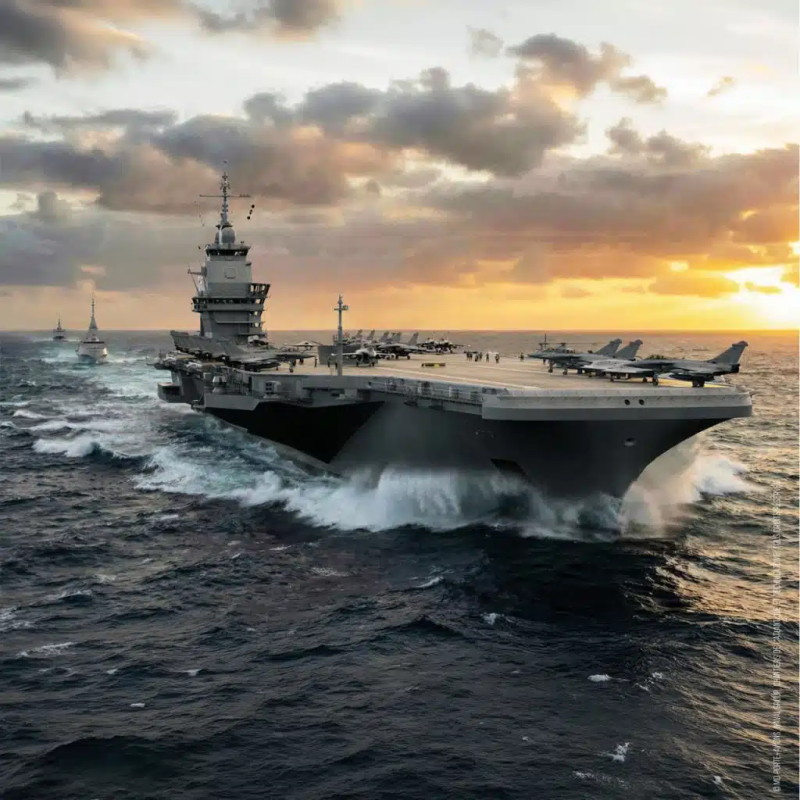
France Libre will be considerably larger than her predecessor, with a displacement of 80,000 metric tons (42,500 t for the Charles de Gaulle) and powered by a pair of new-generation reactors. The completement will be 30 jet fighters (initially Rafale M F5s, to be eventually replaced by the result of the European Next Generation Fighter project), 6 U.S.-built Northrop Grumman E-2D Advanced Hawkeye early warning aircraft, 6 helicopters and a complement of combat drones.
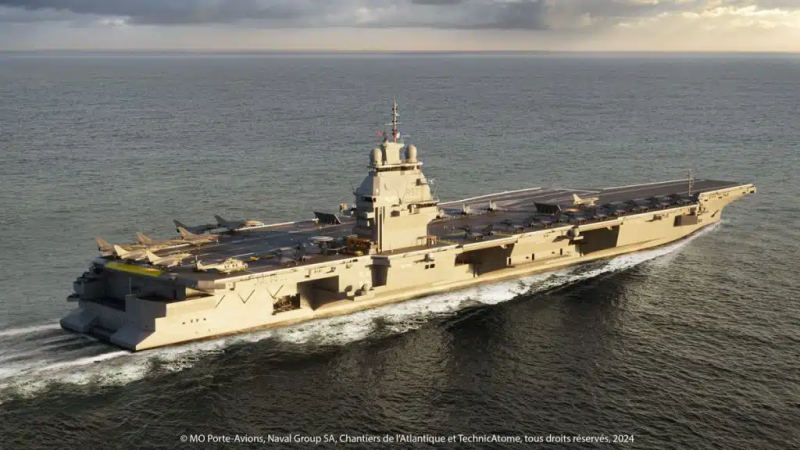
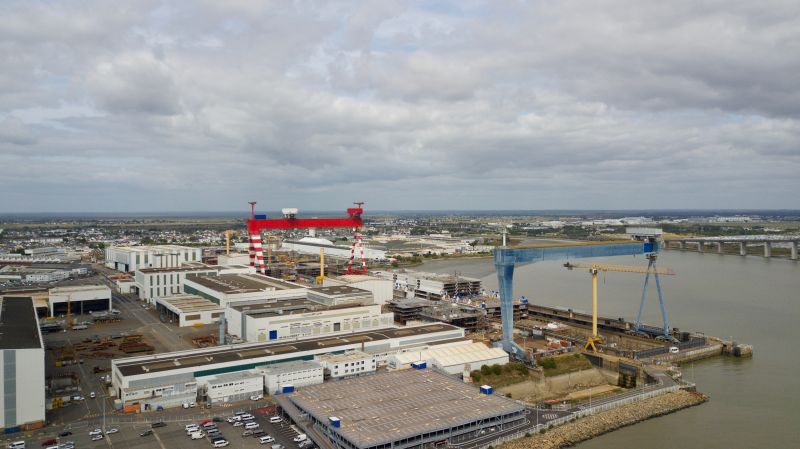
Assembly of the new carrier will involve several locations with a World War II history. Construction of the hull will begin in 2032 at Chantiers de l’Atlantique, Europe’s largest shipyard in Saint-Nazaire. This is the same location (only under a newer name) where British commandos launched a successful raid to disable the Normandie drydock in 1942. (“The greatest raid of all”) It’s also the location the German battleship Bismarck was heading for when it was hunted down and destroyed by the Royal Navy. (Hunting the Bismarck – Part I)(Part II)
Construction of the reactors already began in 2025 at Naval Base Cherbourg, located in Cherbourg, Normandy. Liberating the deep-sea port of Cherbourg (The Liberation of Cherbourg) was an early objective of the Allied campaign in France after D-Day, to ensure the flow of supplies. Final outfitting and nuclear fueling will be performed at the naval base at Toulon. It was here that the Vichy France government scuttled its fleet, including three battleships and seven cruisers, to prevent it from falling into German hands.





Beaches of Normandy ToursBand of Brothers Tours48 Rue de Thouays, 50480 Sainte-Marie-du-Mont, Normandy, France
Phone: +1 855-473-1999Monday - Friday, 10am - 6pm ETe-mail: info@beachesofnormandy.com