Beaches of
NormandyTours
NormandyTours
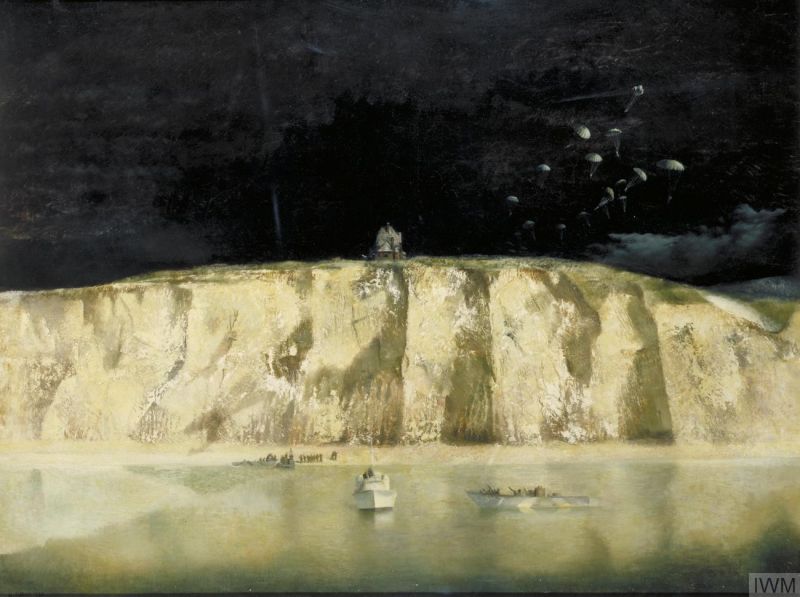
One of the critical theaters of World War II, up there in importance with Europe, the Eastern Front, North Africa or the Pacific, was the technological front. Constant technological advances, pursued at a breakneck pace, promised victory to the best innovator and threatened whoever lagged behind with defeat. One of the many arenas of technological competition was that of radar, which enabled effective bomber interception, night hunting and highly accurate warship gunnery. The Bruneval Raid, officially called Operation Biting, was one of the battles for radar supremacy, carried out on the night of February 27-28, 1942.
Britain was an early adopter of radar technology, and the Chain Home coastal radar stations became a vital part of the British air defense system (The Dowding System) during the Battle of Britain, as discovered on our Britain at War Tour. Germany, however, was another early pioneer, and the two countries were locked in a research race which led to the so-called "Battle of the Beams" (The Battle of the Beams) when Germany started using guiding night bombers via radio signals. In 1939, one year after the introduction of Chain Home, the Germans already had a better system code named Freya, which was more accurate and could scan the sky in a full 360° arc. One more year later, they introduced the new Würzburg radar. The Würzburg system was designed to work in tandem with Freya. The latter was an early warning device with long range but limited accuracy. Würzburg had a shorter range but was far more accurate, and could track a fast-moving bomber with an error margin of 49 ft (15 m). It could also use a range of frequencies, which meant it couldn't be jammed by flooding a single frequency with radio noise.
.jpg)
One of the British men keeping tabs on German radar development was Reginald Victor Jones, who was working with the Royal Air Force (RAF) as the country's first scientific intelligence officer. Leaked German documents, the examination of crashed Luftwaffe bombers, decrypted Enigma messages and the interrogation of German prisoners-of-war all pointed to Germany having developed a direction radar system. Such a device could help the Luftwaffe intercept British night bombing raids over German-occupied Europe – at this stage in the war, Britain was fighting alone, and these raids were one of the only two ways (the other being commando operations) by which they could take the fight to the Nazis.
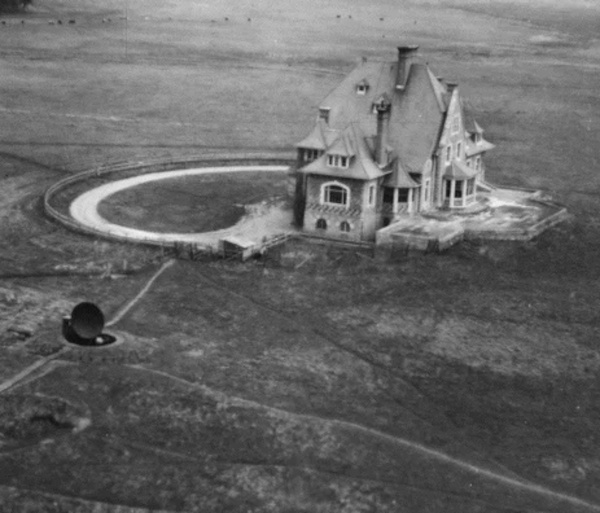
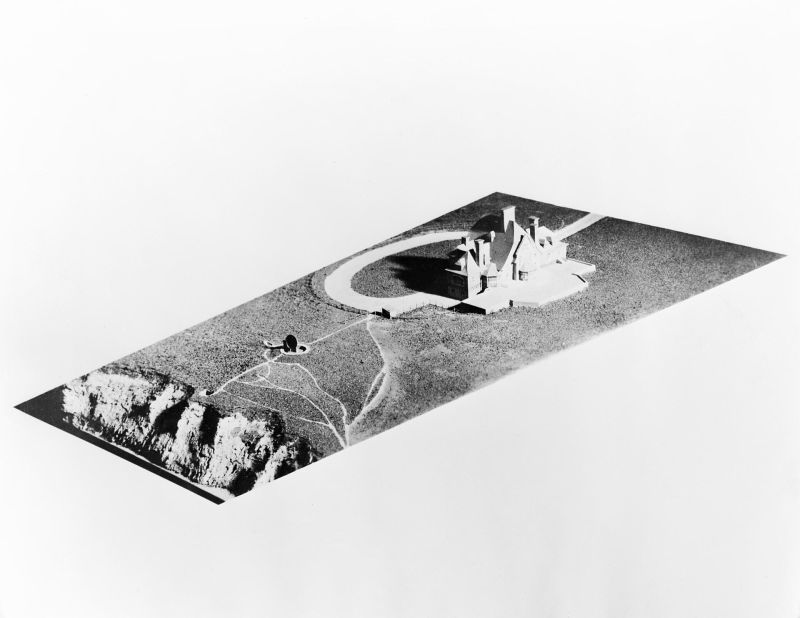
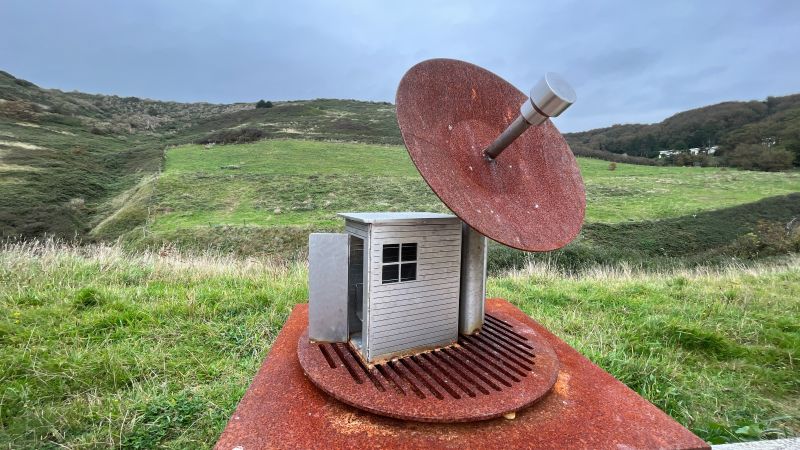
An RAF reconnaissance flight over eastern Normandy brought Jones the proof he needed. Photos taken over Cap d'Antifer, some 12 miles (19 km) north of Le Havre, showed a device with a round antenna dish next to a chateau built atop a coastal cliff, close to the village of Bruneval. This device had to be the new German radar!
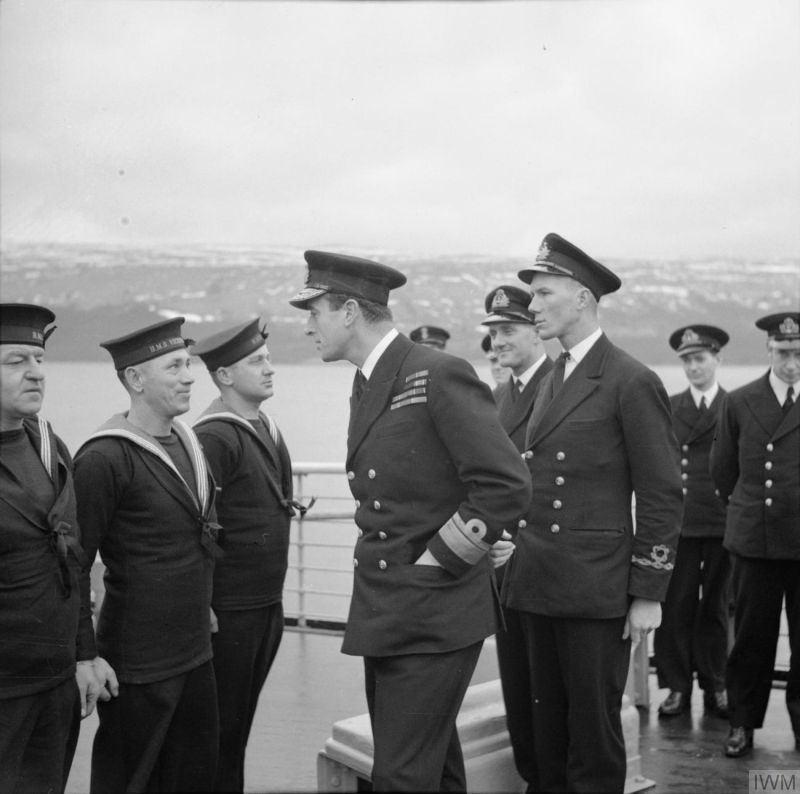
Jones needed to examine the radar, or at least gather more information about it, before he could develop new countermeasures. A request to raid the Bruneval site was sent to Lord Mountbatten (Lord Mountbatten), the commander of Combined Operations. Mountbatten took the proposal to the Chiefs of Staff Committee, whose initial reaction was lukewarm. The RAF was interested in acquiring new radar technology, but the Army and the Royal Navy were reluctant to support the idea with resources, believing it would only benefit the Air Force. The plan was only pushed through when Prime Minister Winston Churchill (Churchill – Part I) (Part II), who was always keen to gain a technological edge, became aware of it and lent it his support.
Mountbatten planned a small, quick operation that would get in, take notes and photos of the radar, dismantle it if possible, and get back out before the Germans could mount a response. There was a cove at the base of the cliff that was suitable for landing craft, but it was protected by a guard house and several defensive positions. An amphibious landing might have been able to overcome these defenses, but probably not before the alerted Germans destroyed the radar device to prevent it from being captured.
An airborne operation provided an alternative, a hopefully stealthier way to insert the commando unit, which could get the job done, neutralize the beach defenses from behind, and then board some landing craft to exfiltrate.
Major General Frederick Browning, the "father of the British airborne forces," was enthusiastic, as a success would have demonstrated the value of airborne troops to the rest of the military. The problem was that the 1st Airborne Division only had two parachute battalions at the time, only the 1st Parachute Battalion was fully trained, and Browning wanted to hold that one back for larger operations. 'C' Company of the 2nd Battalion was chosen for the mission. The company was made up of Scottish soldiers under the command of an English officer. Browning suggested replacing the officer with his own adjutant, fellow Scotsman Major John Frost, so the unit might operate better in the field. Frost, however, had not yet finished his parachute training; he eventually made the last of his required number of jumps just a few hours before the deadline.
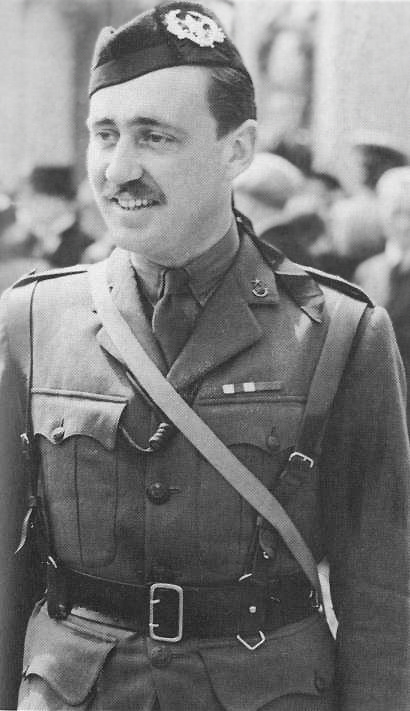
The paratroopers were divided up into five groups for the mission, each named after a historical British admiral. "Nelson," with 40 men would drop first and move to the beach, surprising the German defenses from an unexpected direction and taking them out, making it possible for the raiders to leave by boat. They would also guard the road leading from the chateau to the beach. "Hardy," 20 men including Frost, would secure the chateau and capture any radar technicians found there. "Jellicoe," 10 men, would secure the radar itself outside the chateau. "Drake," 10 men would move north to a cluster of farm buildings and trees called Le Presbytère some 400 yards (366 m) north of the chateau, where somewhere between 60 to 100 Germans soldiers were stationed; they would block these soldiers from moving onto the chateau once the action began. The final group, 40-strong "Rodney," would guard the operation from the landward side, act as reserve, and would be the rearguard once everyone started heading down to the beach. (Interestingly, the Rodney group was named after 18th century officer Lord George Rodney. Rodney was also the namesake of the battleship HSM Rodney, which participated in the final battle against the German battleship Bismarck (Hunting the Bismarck – Part I) (Part II) in 1941.)
Several other people were added to the raiding force. Ten Royal Engineers were detailed to the mission; four of them would lay down anti-tank mines as defenses against a counterattack, and six would dismantle the radar and put it on a special trolley cart for transportation down to the beach and onboard the landing craft.
The engineers, however, needed someone to train them in which parts of the device were important and how to dismantle it. That man was RAF Flight Sergeant C. W. H. Cox, a ham radio enthusiast who was considered one of the best radar mechanics in Britain. On February 1, 1942, less than a month before the mission, he was ordered to report to the Air Ministry, where an air commodore informed him that he had volunteered for a dangerous job. Cox protested that he never volunteered for anything, drawing a displeased replay of "But now you’re here, Sergeant, will you volunteer?" Having been "voluntold," Cox was then sent away for a 12-day parachute training course which made everything even worse for him. Cox then instructed the engineers in radar dismantling, suggesting that their commander, Lieutenant Vernon, should be the second radar expert, since he proved especially adept at it. One final addition to the team was a mysterious "Private Newman," real name Peter Nagel, a German Jewish refugee and commando, who was to be the translator. The raider force counted 120 men in total.
It was decided that the mission took place at full moon (so the men could see) at high tide (so the landing craft could reach the beach without running aground). This gave the planners the window of February 23-27, 1942. Should the mission be delayed beyond that point (possibly due to bad weather, which was a very real possibility), the men would need to wait an entire month.
On February 11-13, two German battleships, a heavy cruiser and their escorts performed the Channel Dash, a rush through the English Channel. The event proved that the Channel was not nearly as secure as the Royal Navy believed it to be, and that the ship going to pick up the commandos might very well run into trouble on the way there... or back.
The final exercise also went badly. The drop went wide, many equipment canisters landed far from the troops, and the landing craft were waiting for the men at the wrong beach. The signs were inauspicious. The bad exercise was repeated on February 22 and went reasonably well. Then bad weather struck, forcing several delays until the mission finally took off on February 27, the last possible date.
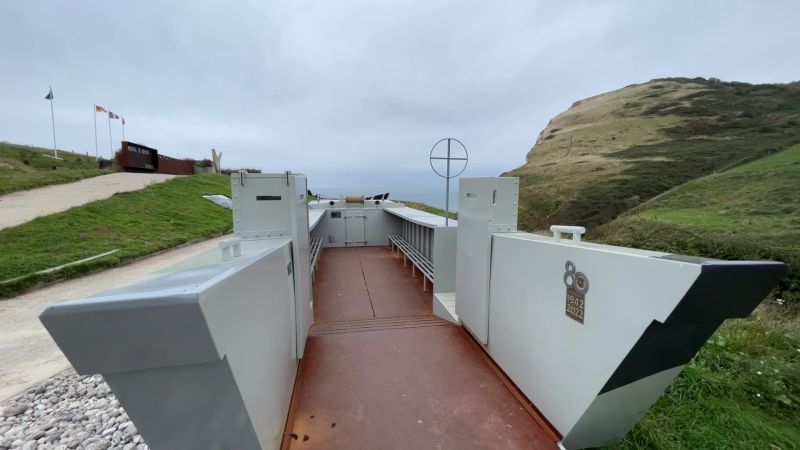
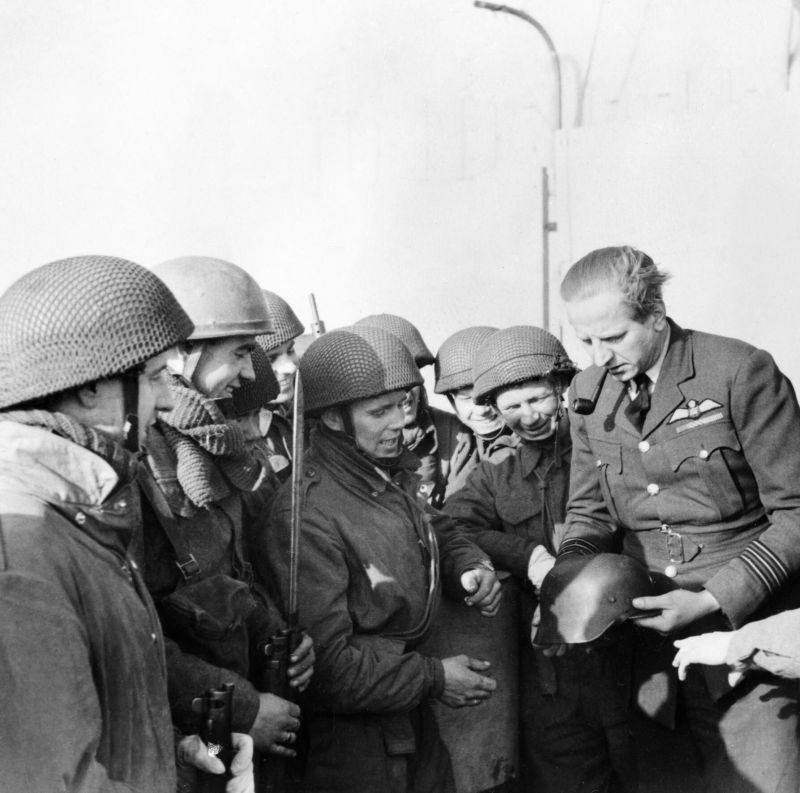
The men were taken to a Nissen hut, told to pick their parachutes at will from a set of nighttime dark blue and green ones, and given beef sandwiches and cocoa or tea laced with rum to calm their nerves. They then marched out and were led by a Scottish bagpiper playing regimental marches to a squadron of Armstrong Whitworth Whitley bombers. Once the men boarded in sticks of ten, they put on silk gloves and crawled into sleeping bags for warmth inside the chillingly cold planes. The bags did not protect them from the discomfort of the bomber's ribbed metal floor. Meanwhile, the HMS Prinz Albert, originally a Belgian transport ship, was making its way toward the Normandy coast with six LCA (Landing Craft Assault) boats.
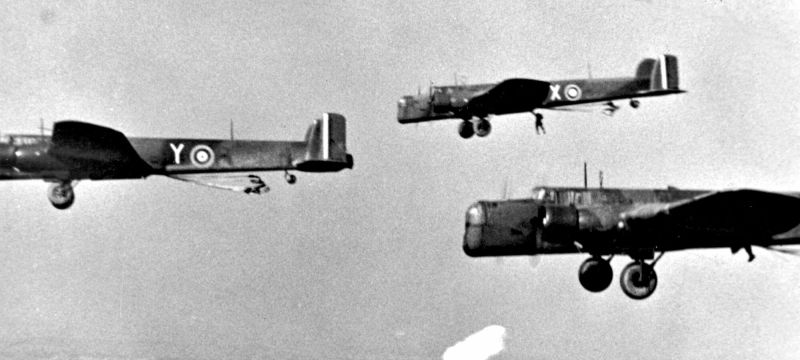
The very radar the men were sent to snatch detected them on approach, and the bombers came under heavy flak fire. Nevertheless, the jumps went ahead and everyone landed in the drop zone to the east of the chateau... that is, everyone except for half of "Nelson."
The force that was supposed to descend to the beach and secure it was now at half strength, and nobody knew what happened to the missing men. Nothing could be done about it, so Frost went ahead with the mission, hoping that half of the Nelson force would still be enough to clear the beach.
The various groups took up their positions, and sprung into action once Major Frost gave four blasts on his whistle. The chateau turned out to be dirty, lacking furniture, and empty of Germans except for one man upstairs who opened fire at them and was killed.
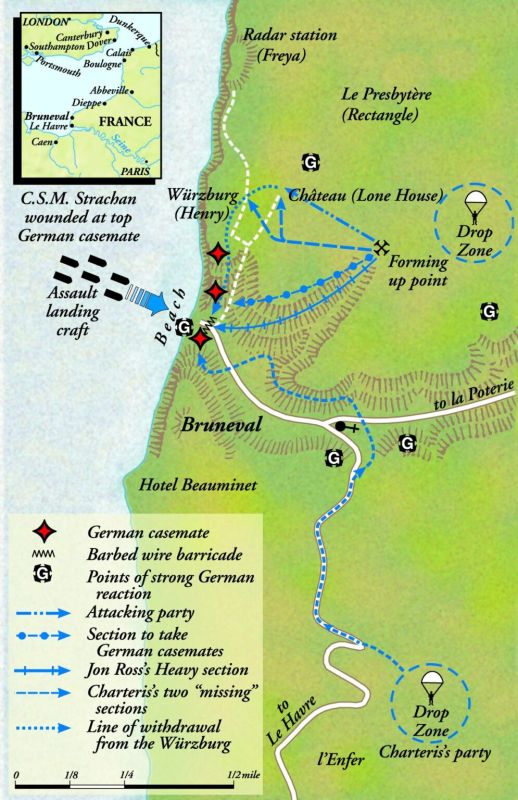
The radar itself was guarded by a few Germans who quickly dispersed when the Brits showed up. One ran off toward the cliff and accidentally went over the edge in the darkness. He managed to hang on until the commandos rescued him and took him captive. Gunfire barked up from the direction of Le Presbytère. A quick interrogation of the captive revealed that the farm buildings housed about 100 soldiers. They were well-equipped and had mortars, but were communication specialists with little combat experience. The captive also revealed that the radar detected the incoming squadron, and its operators shut it down and left when they realized the flight was heading straight at them.
While the prisoner was being questioned, Sergeant Cox drew sketches and diagrams of the device and Lieutenant Vernon took photos. The latter soon had to stop as the camera's flashes attracted gunfire from the distance. The engineers set about dismantling the radar and loading it onto their fold-out cart even as their flashlights started attracting even more German fire. One man was killed defending the chateau.
By the time the engineers were done, gunfire could be heard from every direction as the Germans were mounting a counterattack. The situation was growing confusing. Major Frost saw German flares fired from the beach, and was wary it might have meant that the present half of "Nelson" failed to secure their only exit route. Still, there was nothing to do but head for the exfiltration point and hope for the best.
As Frost feared, Nelson force failed to secure the beach, and were pinned down. When the group pushing the trolley appeared at the top of the cliff, one man was shut multiple times by German machine guns. The Rodney group sent word that the Germans had recaptured the chateau. Frost gathered whomever he could and launched an all-out attack against the guard house on the beach. The Germans were confused, hesitated and withdrew.
.jpeg)
Even as Frost's attack manifested, the Brits received unexpected help. Them missing half of "Nelson" arrived with a loud cry, forcing the Germans manning a machine gun to flee.
It turned out that the 20 missing men had been dropped well south of the landing zone and made their way north. They were in a hurry not to be left behind and had no choice but to take refuge in audacity and simply jog through the German-occupied village of Bruneval. Whether it was the darkness, or the snow dampening their footsteps or the Germans simply not expecting the enemy to show, the men actually went unchallenged at first. In fact, one German soldier joined them, probably thinking they were his countrymen heading up north to counter whatever disturbance was happening there. The unfortunate German and the paratroopers realized the mix-up at the same moment, and he was quickly dispatched.
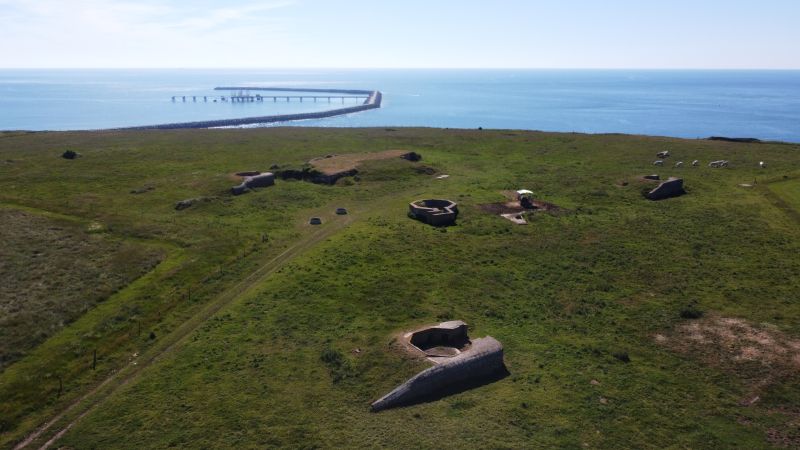
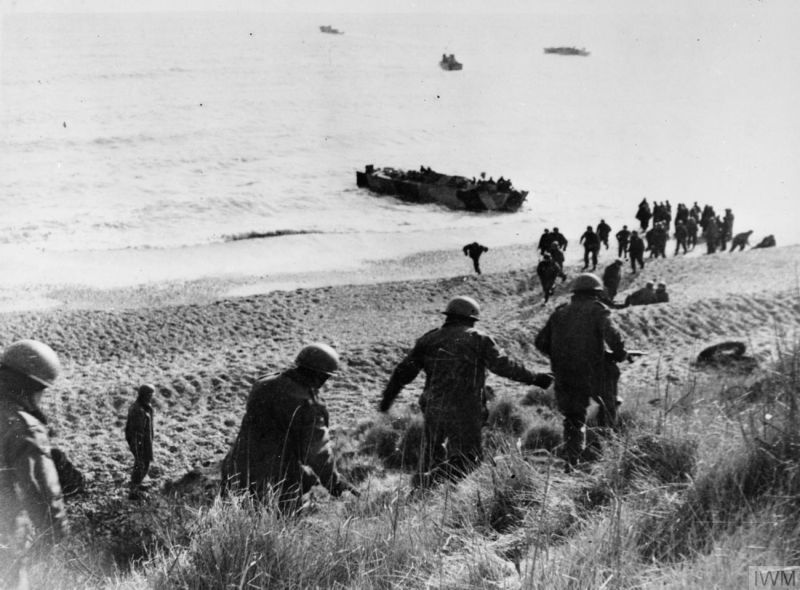
Everybody reached the beach, but Frost found he could not raise HMS Prinz Albert on the radio, and resorted to firing some flares in the hope they would be seen. Meanwhile, the Rodney rearguard reported that German vehicles were approaching. With the landing craft nowhere in sight, Frost prepared to dig in on the beach and fight to the last.
It was then that the landing craft finally arrived. Unknown to the commandos, the Prinz Albert was first hindered by weather, then it had to evade a German patrol comprising a destroyer and two E-boats in the dark. Had they been spotted, the transport ship would certainly have been sunk and the commandos stranded. A hurried and confused scramble aboard the LCAs and a quick trip back to the transport, and the paratroopers were homeward bound with their precious spoils, escorted by four destroyers and a squadron of Spitfires. (Supermarine Spitfire) Two of the commandos died, six were wounded, and another six separated form the rest and left behind, captured by the Germans. One member of the French Resistance (Factions of the Resistance – Part I) (Part II) who had helped with the earlier reconnaissance of the area was captured and executed.
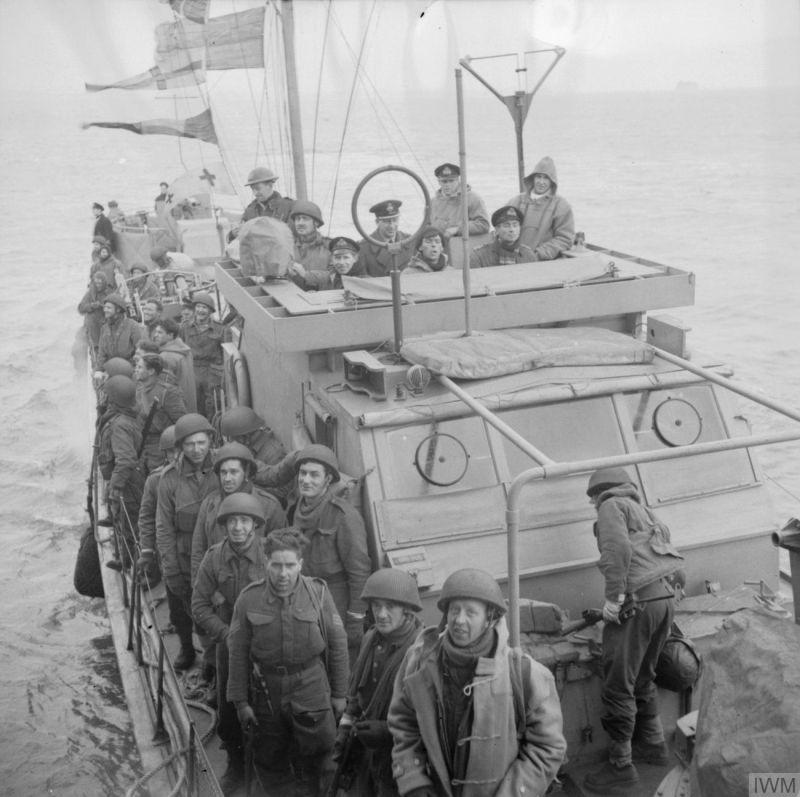
German reports discovered later revealed that an entire infantry regiment had been stationed in the area; several platoons were out on night exercises, and quickly reacted to the raid. The vehicles that showed up during "Rodney's" retreat belonged to them.
Analysis of the Würzburg radar revealed its ability to operate on multiple frequencies, rendering older jamming techniques useless. Instead, the British would have to deploy a new countermeasure they had already been working on: "Window," a code name for an early version of chaff. John Frost, promoted to Lieutenant-Colonel, would lead the entirety of the 2nd Parachute Battalion and earn acclaim for his actions in Arnhem during Operation Market Garden. (Operation Market Garden) One unexpected benefit of the raid was that the Germans started surrounding other radar sites with barb wire to hinder possible future commando raids. The barb wire emplacements, in turn, made it easier to recognize the sites on recon photos.






Beaches of Normandy Tours
Beaches of Normandy Tours SAS, Normandy, France
Band of Brothers Tours
Band of Brothers Tours FZCO, Dubai, UAE